


















Two Words.
At the lowest point of a very hard season, a friend texted me two words: “Hey rafiki.” Which means Hey, Friend.
There was no advice in it. Not a question I had to find the energy to answer. It arrived on time, from someone who knew me, and it asked for nothing.
I named the company after that message. That is the whole ambition, and it has never changed: The Right Help, Arriving While it Still Matters. Everything since has been the engineering problem of making that Ordinary instead of Lucky.
The Same Wall, in Two Places.
I was studying engineering in Europe when I first went looking for a Therapist. I could not find one who fit: not my language, not my budget, and nobody who understood the particular weight of being far from home.
I came back to Kenya assuming distance had been the problem. The wall was taller here. Where do you start? Who is actually licensed? What will it cost, and why is that a secret until the invoice arrives?
Good Care existed in both places. Reaching it was the hard part, and that is a different problem entirely.
Weeks on the Inside.
I checked into a wellness centre in Kenya to get help and to understand my own mind. I stayed for weeks, and somewhere in there I stopped only being a Client and started watching how the place actually ran.
The Practitioners holding everyone together were carrying their own weight: Notes in one place, bookings in another, invoices unpaid for months, messages arriving at midnight across five different apps. They were excellent at the work and buried by everything around it.
People needed a way in. Practitioners needed a way through. Nobody was building the road between them, and I could not stop sketching it.
What I did not Know about Myself.
Somewhere in all of this I was assessed for ADHD, years later than it could have happened. I am not going to claim that an earlier answer would have changed everything. I will say that a decade of explanations I had made up about myself turned out to have a better one available the whole time, and nobody around me had the tools to reach for it.
It is why Early Screening, Structured Assessment and a record that follows a Person matter as much to me as Payments do. Not so that software can decide what someone is, but that a Clinician gets the picture while it is still early enough to be useful.
That is not a diagnosis story. It is a timing story, and timing is an engineering problem. Structured understanding reached me years later than it could have.
The Years People thought I was Gone.
People kept asking where I had gone. I have been coding and building since I was 14, and I could have built almost anything. For a while I built a lot of things in different places: Payment systems, 3D games, Blockchain early enough that I spent a while explaining it to rooms that were not sure they wanted it, Machine Learning pipelines, Accessibility tools, Open-source tools. But I left every single one of them.
Not because the work was bad. Because none of it was that one thing.
Each one was quietly teaching me a piece of this, though. Payment Systems: that money moving is a promise you have to be able to prove afterwards. Cryptography and Blockchain: that a recommendation nobody can question is worth nothing. Accessibility: that a system excludes People silently, in defaults no one chose on purpose.
Then the problem I had been circling my whole career found me from the inside. I stopped shipping. I checked myself into a wellness centre. From the outside it looked like I had disappeared for a while.
This illness took me closer to the end than I have told most people; more than once, but I found my way back. I am still here, and I know how much of that was luck. Building this is how I make sure the next Person needs less of it.
I was doing the only research that mattered.
“I never left, and the problem never left me.”
A Room Full of Students.
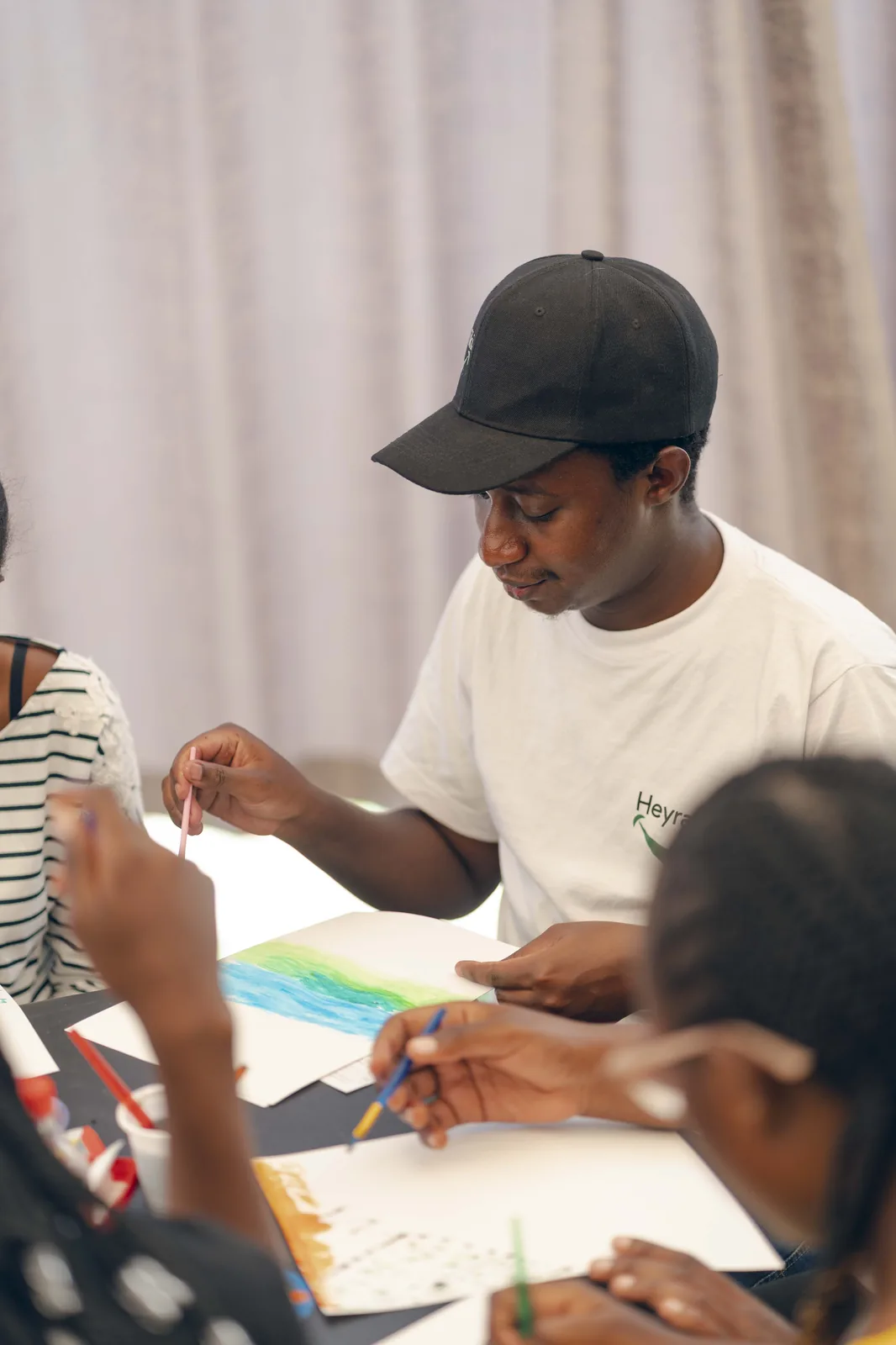
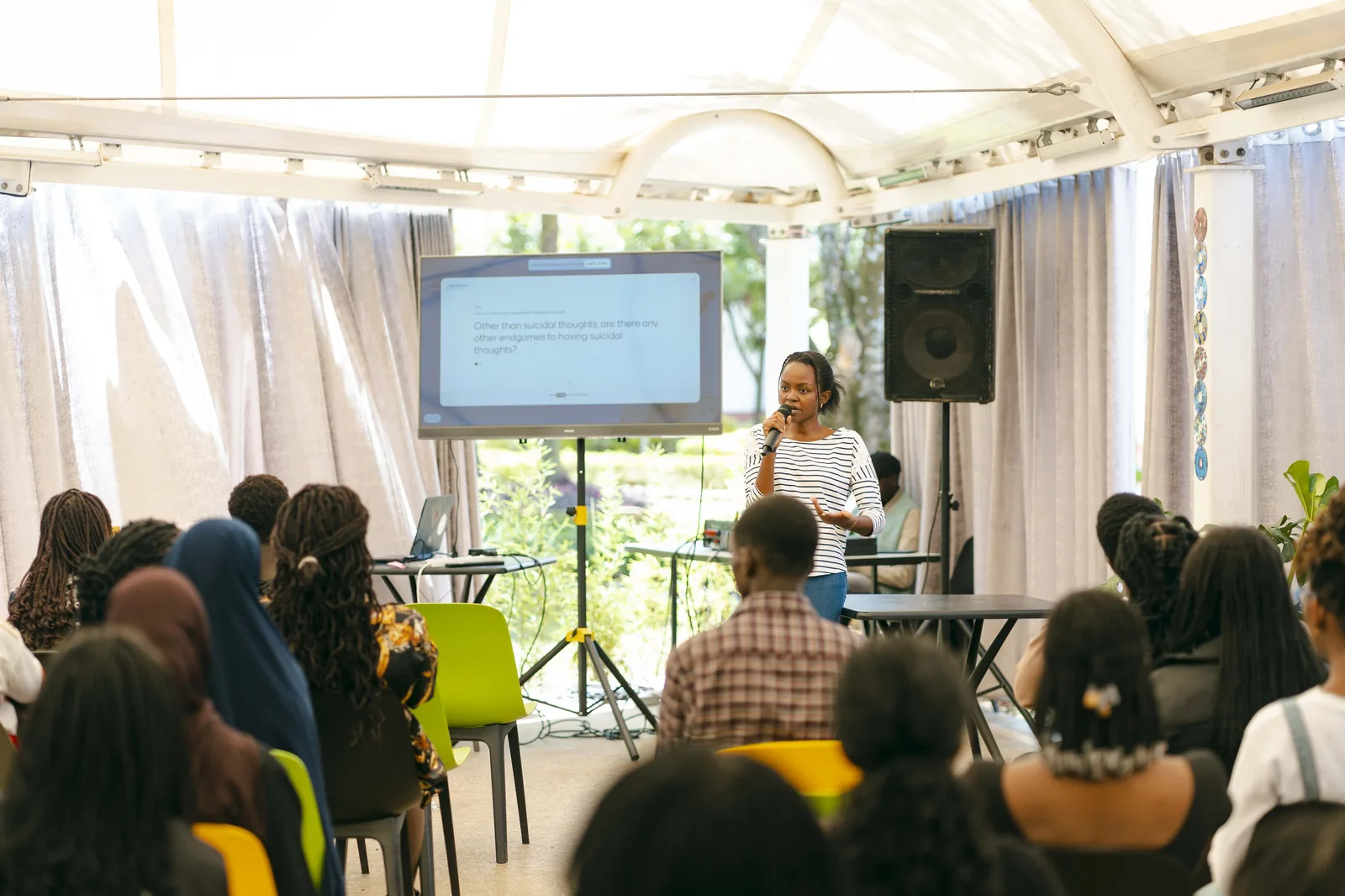
In 2024 we ran an Art Therapy day with more than a hundred University of Nairobi students, alongside a mental wellness talk from Jennifer Kyalo, Therapist, Author and founder of Safe Space Arena.
Students who would never have booked a Session talked openly within the hour. The stigma we had been warned about lost most of its power the moment the setting stopped singling anyone out.
Then the day ended. For every student who needed more than an afternoon there was no verified Practitioner within reach, no way to fund the Session, and no record that would travel with them. We had proven the demand and walked straight into the missing system.
By then I had seen the same failure from every side of it.
- 01A Person who cannot tell where to begin.
- 02A Practitioner losing the day to admin.
- 03Cover that exists and cannot be used.
- 04Money arriving months after the work.
- 05A record that stops at the edge of one Organization.
Mental Healthcare does not have an access problem. The systems around Care were never built to work together.
The Part Nobody has Written Down.
Some of this is assembly. Bookings, Notes, payouts, Claims: those are known problems, and we are good at them.
The rest is not. There is no accepted way to represent Consent so that it travels with a record and can still be withdrawn. No agreed shape for a Mental Health history a Clinician can trust and a Person still controls. No settled method for showing whether funded Care actually reached the People it was meant for.
I do not think those are chores waiting for an engineer. I think they are primitives the field has not written down yet, and I would like us to be the ones who write them well, in the open, with the workings shown.
So We are Building the Road.
Heyrafiki connects the Person looking for Care, the Practitioner delivering it, and the Insurers and Organizations paying for it, on one system.
We build it in the open, because something a Person leans on during the worst week of their life should be inspectable, and it should outlast the Company that started it.
Kenya is the starting point, not the limit. Mobile money, Cover split across several funders, several languages in one Session: those are the conditions here, and Infrastructure that holds under them does not need rebuilding anywhere else.
The next generation will meet Mental Healthcare on a phone, in languages the old systems never served. I do not intend for them to arrive and find the same wall I did.